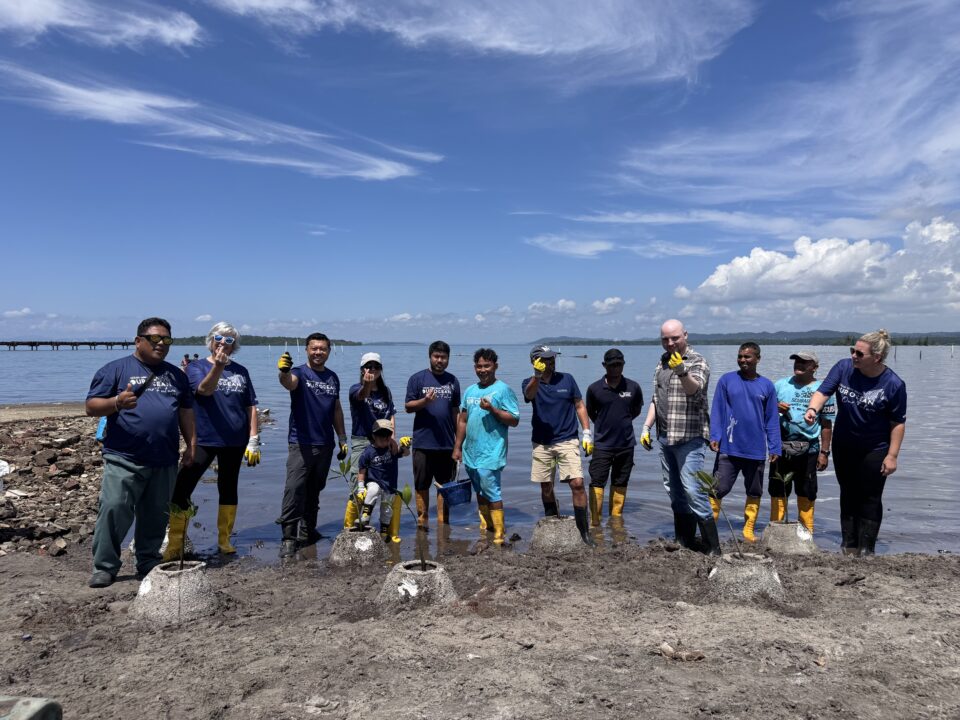
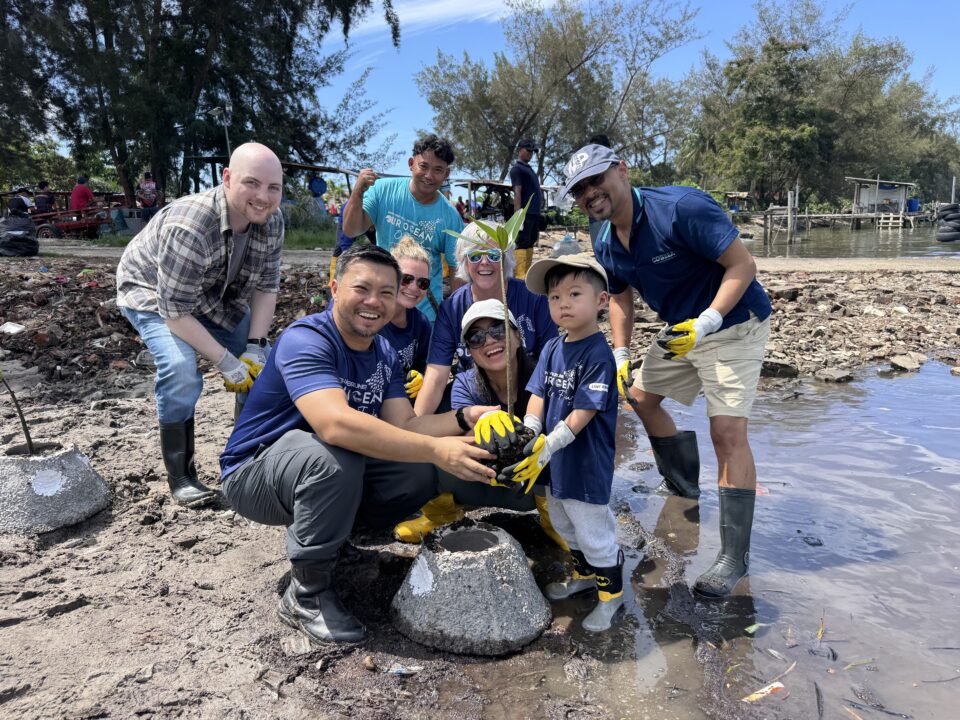
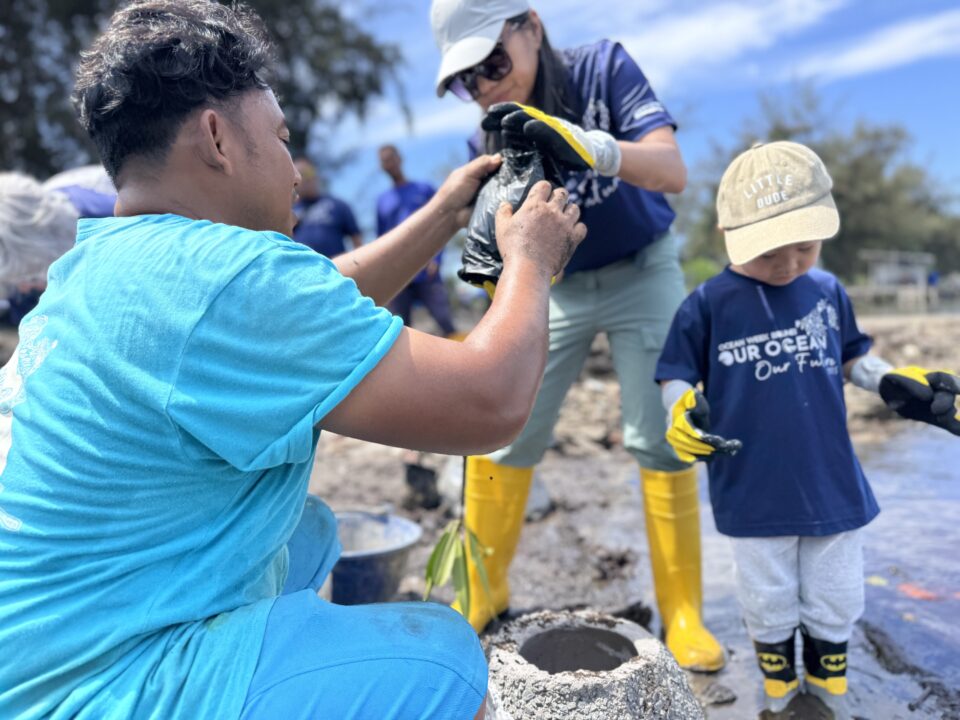
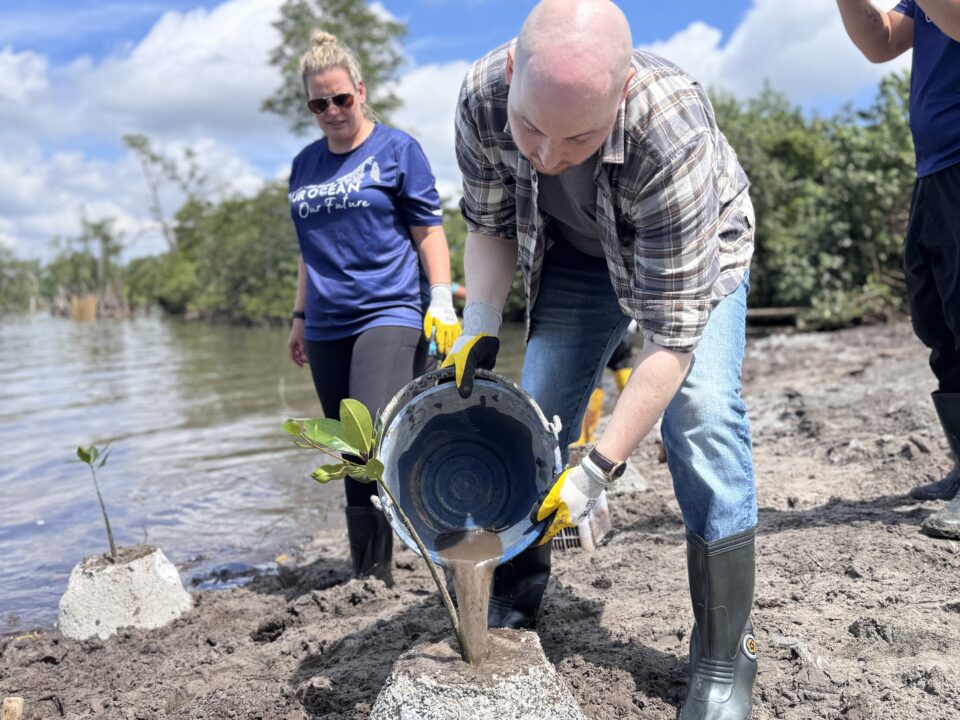
Communities, partners and ocean advocates came together for a mangrove planting activity held in conjunction with World Environment Day and World Ocean Day 2026, highlighting the importance of mangroves in protecting coastlines, supporting marine biodiversity and building climate resilience.
The activity was organised as part of the early pilot phase of the Carbon AKAR Project, ahead of its official launch on 11 June 2026. Carbon AKAR is a long-term mangrove restoration and climate action initiative by Poni Foundation that aims to connect environmental restoration with community participation, technology-enabled monitoring and Brunei’s future blue economy opportunities.
The mangrove planting featured the participation of Mahesh Pradhan from the Coordinating Body on the Seas of East Asia, COBSEA, under the United Nations Environment Programme, UNEP and Zachary DeLong from Clean Valley CIC, who were both speakers at Ocean Week Brunei. COBSEA is a regional intergovernmental mechanism administered by UNEP that supports cooperation in the protection and development of the marine environment and coastal areas of the East Asian Seas. Its work includes strengthening regional action on marine and coastal ecosystems, pollution reduction and ocean-based climate action, making its involvement especially meaningful for a mangrove restoration activity linked to both World Environment Day and World Ocean Day.
Their participation helped strengthen the message that protecting oceans begins long before the shoreline, through the restoration of rivers, wetlands, mangroves and coastal ecosystems that support life both on land and at sea.
Mangroves are among nature’s most effective ecosystems. They help protect coastal areas from erosion, provide nursery grounds for fish and marine life, store carbon, filter water, support biodiversity and help communities adapt to the effects of climate change. As a bridge between land and sea, healthy mangroves play an important role in keeping coastal and marine ecosystems resilient.
The activity also reflected the wider vision of the Carbon AKAR Project, which is being developed as a practical blue economy pilot for Brunei. The project aims to support mangrove restoration while creating opportunities for local communities to be involved in planting, monitoring and long-term ecosystem care. Through future partnerships, the project will also explore how companies and organisations can measure their greenhouse gas emissions and take climate action by supporting mangrove restoration.
Poni Foundation said the project is not only about planting trees, but about building a system that can continue over the long term. By bringing together communities, youth, companies, government agencies, international partners and technology providers, Carbon AKAR aims to make conservation more practical, measurable and sustainable.
The activity was also a reminder that ocean protection is not limited to beaches, reefs or open water. What happens upstream, along rivers, wetlands and mangrove areas, directly affects the health of the ocean. Protecting mangroves helps protect fisheries, marine biodiversity, coastal communities and future livelihoods.
Held during the period of World Environment Day and World Ocean Day, the planting carried a simple but important message: every mangrove planted is a commitment to healthier oceans and a more sustainable future.
Members of the public, schools, youth groups, companies, researchers and community organisations are encouraged to be part of the Carbon AKAR Project by volunteering, supporting mangrove planting activities, partnering on research and monitoring, or contributing to future restoration efforts.
The Carbon AKAR Project forms part of Poni Foundation’s wider blue economy work under Ocean Week Brunei, which seeks to turn ocean awareness into practical action, community opportunities and long-term sustainability for Brunei.